
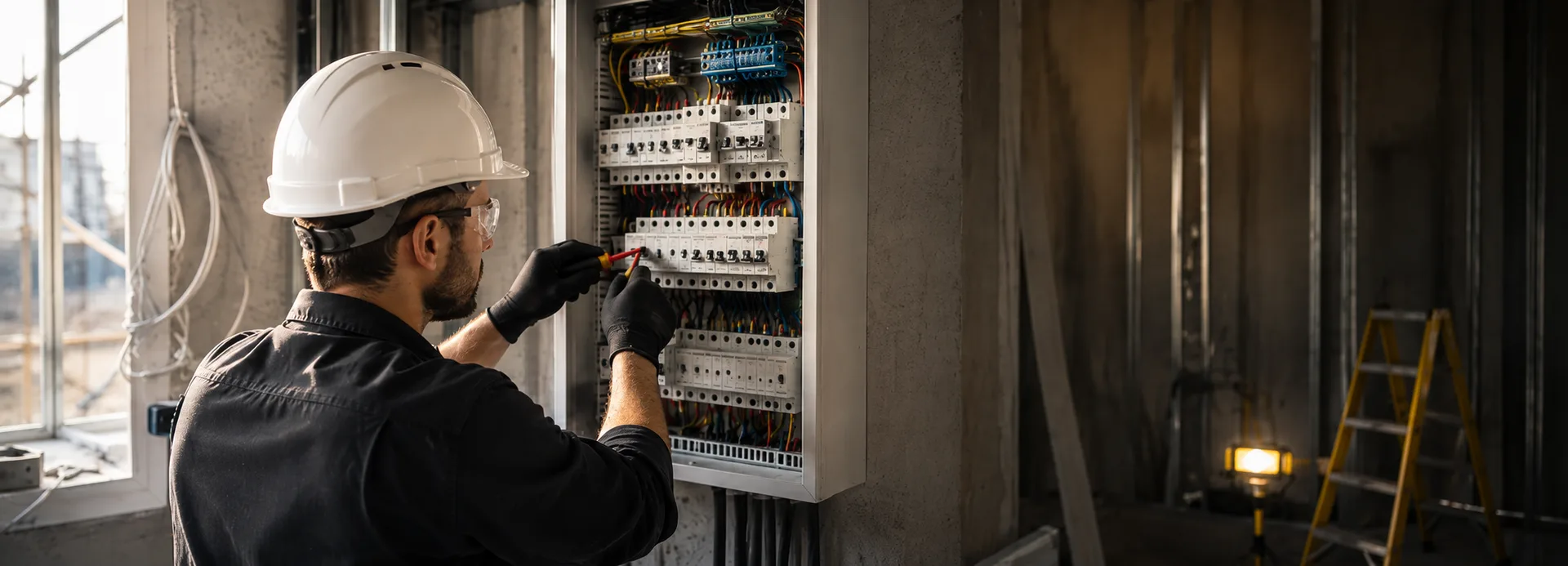
Find Trusted Electricians in Auckland
Auckland electricians on BizConnect cover everything from switchboard upgrades to EV charger installs for homeowners across the city.
Electrical work is one of the few trades where doing it yourself is not merely unwise but largely illegal — prescribed electrical work must be done by a registered electrician holding a current practising licence. Auckland's older housing stock means a lot of the work is upgrade rather than installation: switchboards still running rewireable fuses, minimal outlets, and cabling that predates modern standards. EV charger installation has become one of the fastest-growing residential jobs.
Common electrician jobs in Auckland
Switchboard and wiring upgrades
Replacing an old fuseboard with a modern board fitted with RCDs, which cut power fast enough to prevent electrocution. If your board still uses rewireable ceramic fuses, this is the single highest-value electrical upgrade in the house.
Lighting installation
Downlights, LED retrofits, outdoor and security lighting. Retrofitting downlights into an insulated ceiling has specific clearance requirements, so it is worth confirming the fittings are rated for the insulation type.
EV charger installation
Installing a dedicated home charging point. Most homes need a dedicated circuit run from the switchboard, and older boards may need upgrading first — which is often the larger part of the cost.
Electrical safety checks
A general inspection of the installation, common before buying a house or after taking on a rental. Rentals have their own compliance obligations under the healthy homes standards.
Check they are licensed
Prescribed electrical work must be carried out by a registered electrician holding a current practising licence. The EWRB maintains a public register you can search by name. On completion, you should receive a Certificate of Compliance for the work — keep it.
Electrical Workers Registration Board (EWRB)What our electricians cover
- Switchboard and wiring upgrades
- Lighting installation
- EV charger installs
- Electrical safety checks
What affects the price
- Whether the switchboard has spare capacity, or needs upgrading before the new work can proceed
- How accessible the cable runs are — an accessible ceiling cavity is far cheaper than chasing into solid walls
- The age of the existing wiring, since old cabling may need replacing rather than extending
- Whether the work requires a mains upgrade or coordination with the lines company
- Fittings you choose, which can vary widely for the same installation labour
Before you hire a electrician
- Search the EWRB register to confirm registration and a current practising licence
- Confirm a Certificate of Compliance will be issued on completion
- Ask whether the quote assumes the existing switchboard can take the new load
- For EV chargers, ask whether a board upgrade is included or quoted separately
- Check they hold current public liability insurance
Electricians — common questions
Can I do my own electrical work in New Zealand?
Almost never. Prescribed electrical work must be done by a registered electrician. A small number of low-risk tasks, such as replacing a like-for-like plug or a light bulb, are permitted, but anything involving fixed wiring is not. Unconsented electrical work can also affect your insurance.
What is a Certificate of Compliance?
A Certificate of Compliance, or CoC, is the document your electrician issues certifying that prescribed electrical work meets the required standard. Keep it — it is commonly asked for when selling a house, and it is your evidence the work was done properly.
Why does my EV charger quote include a switchboard upgrade?
A home charger needs its own circuit, and many older Auckland switchboards have neither the spare capacity nor the space for it. Where that is the case, the board has to be upgraded first. It is worth asking upfront whether a quote includes this, as it is a common reason two quotes differ sharply.
Why use BizConnect for a electrician?
Get quotes from verified local electricians fast — always check current registration with the Electrical Workers Registration Board (EWRB) before hiring.
