
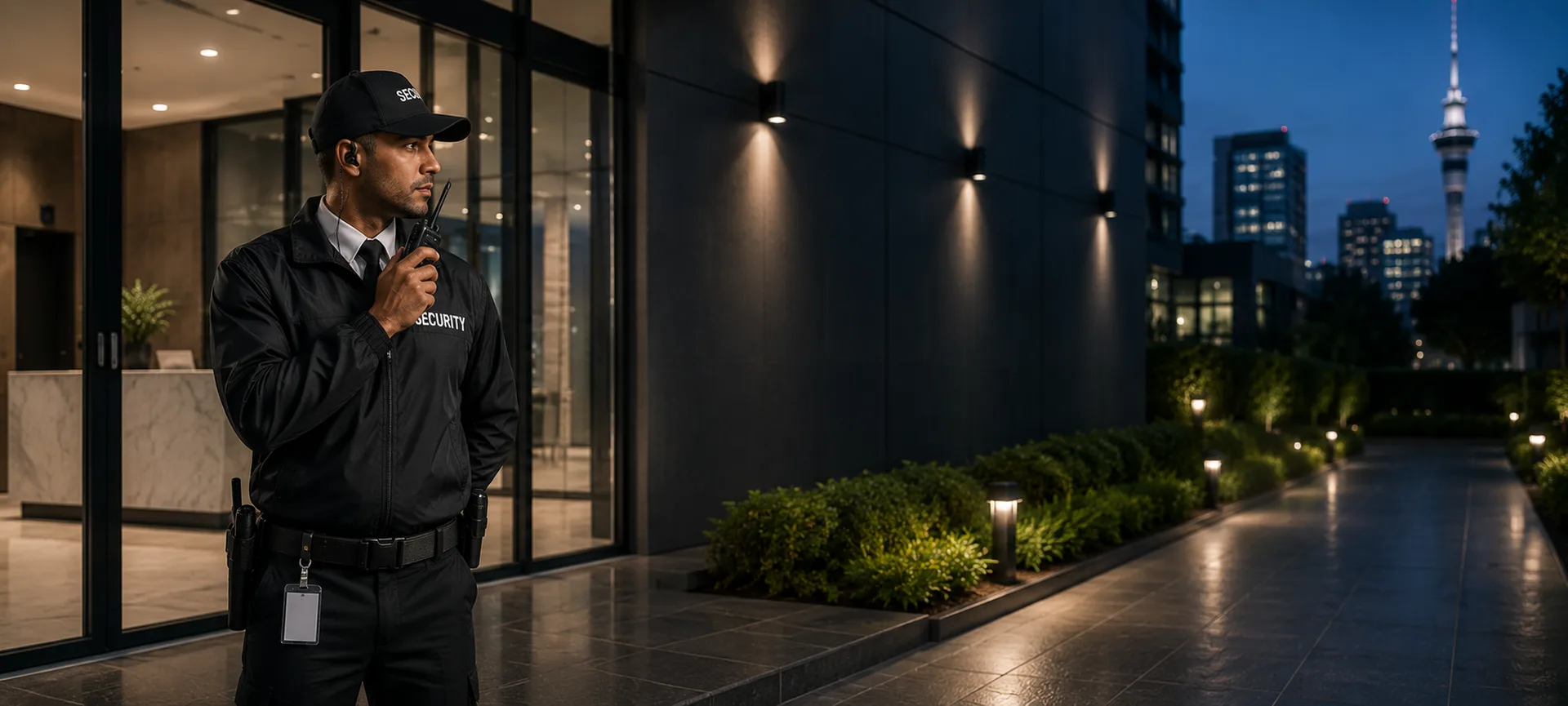
Find Trusted Security in Auckland
Auckland security installers on BizConnect help homeowners protect their property with cameras, alarms and access control.
Home security splits into two decisions that are easy to conflate: what equipment gets installed, and whether it is monitored. Monitoring is an ongoing cost and often the larger long-term expense, so it belongs in the comparison from the start. Much private security work in New Zealand is licensed under the Private Security Personnel and Private Investigators Act, and camera placement also carries privacy obligations where it captures beyond your boundary.
Common security installer jobs in Auckland
CCTV and camera systems
Fixed cameras with a recorder, or cloud-based systems. Placement and lighting affect whether footage is actually usable at night — resolution alone does not guarantee an identifiable face.
Alarm installation
Sensors, control panel and siren, either self-monitored or professionally monitored. Ask how many sensors are included, since quotes are often built around a base package with additions priced separately.
Access control
Keypads, intercoms and electronic locking. More common on multi-unit properties, but increasingly used on standalone homes alongside video doorbells.
Smart home security
Systems integrating with phones and home automation. Worth asking what happens if the internet or power drops, and whether footage is stored locally, in the cloud, or both.
Check they are licensed
Private security work in New Zealand is licensed under the Private Security Personnel and Private Investigators Act 2010, administered by the PSPLA within the Ministry of Justice. There is a public register of licence and certificate holders. Ask any installer which licence or certificate class they hold for the work you need.
Private Security Personnel Licensing Authority (PSPLA)What our security cover
- CCTV and camera systems
- Alarm installation
- Access control
- Smart home security
What affects the price
- The number of cameras or sensors, and how far each is from the recorder or panel
- Whether cabling can be run through accessible roof space or must be surface-mounted
- Recording and storage — local recorder versus cloud subscription
- Whether the system is monitored, which adds a recurring monthly cost
- Equipment grade, since low-light performance and build quality vary considerably
Before you hire a security installer
- Ask which PSPLA licence or certificate class the installer holds
- Compare the total cost of ownership, including any monitoring subscription
- Ask to see sample night footage from the specific cameras being quoted
- Confirm who owns the equipment and footage, and whether the system is locked to one provider
- Check where cameras will point, and whether any capture a neighbour's property
Security — common questions
Do I need a licence to install security systems in New Zealand?
Private security work is a licensed activity under the Private Security Personnel and Private Investigators Act 2010, administered by the PSPLA. Requirements vary by the type of work, so the practical step is to ask which licence or certificate class an installer holds and check the public register.
Is monitored or self-monitored better?
Monitored systems have someone responding when an alarm triggers, including when you are away or asleep, at an ongoing monthly cost. Self-monitored systems send alerts to your phone with no subscription, but only work if you see and act on them. Compare over several years rather than at installation.
Can my cameras record my neighbour's property?
Cameras that capture areas beyond your boundary can engage privacy obligations. In general, keep coverage to your own property, avoid pointing cameras at a neighbour's windows or private areas, and be transparent about what is recorded. If coverage inevitably overlaps a shared space, talk to your neighbours first.
Why use BizConnect for a security installer?
Compare quotes from verified local security installers before you commit to a system for your home.
